Malaysia’s 4GW Solar+Storage to Supercharge ASEAN Grid
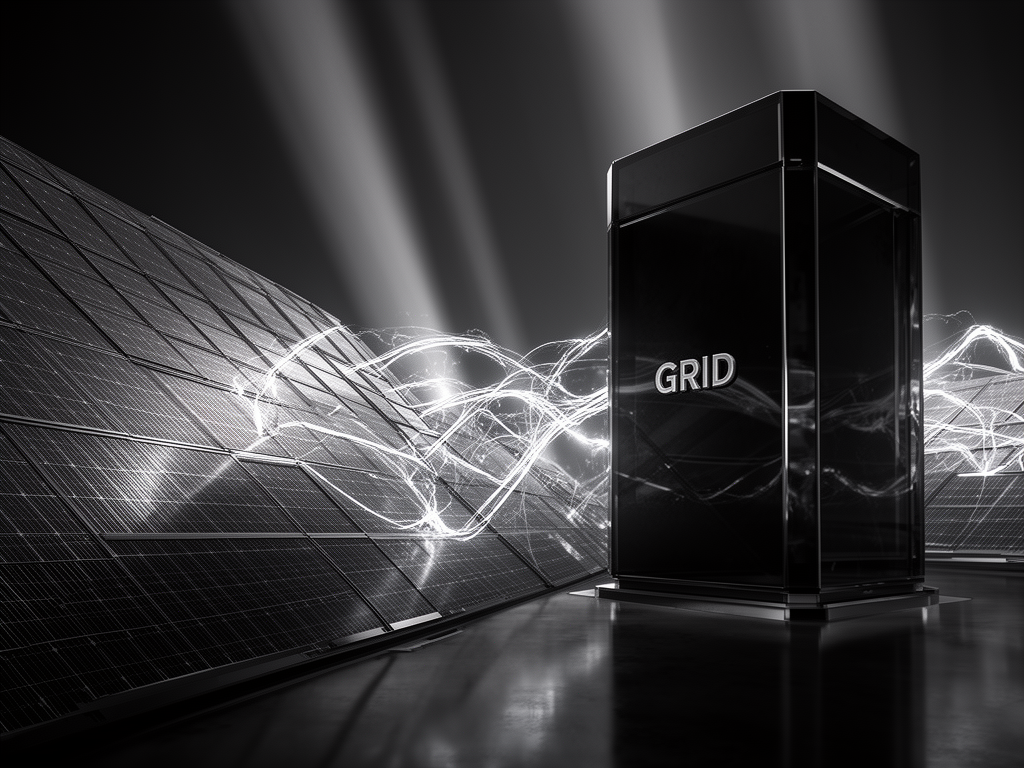
Still planning the ASEAN grid like it is 2014? That is the energy equivalent of running hyperscale data centers on a desktop UPS. Southeast Asia just got a serious upgrade: Malaysia’s World Bank-backed 4 GW solar plus 5.12 GWh storage hub is built to turn intermittent sunshine into export-ready, grid-stabilizing power.
Why this project matters now
Johor’s Southern Johor Renewable Energy Corridor is a multi gigawatt solar-plus-storage build designed for industrial loads and cross-border trade. The World Bank Group’s IFC is partnering with Johor’s state investment arm PDT and developer Ditrolic Energy on a roughly 2,000 km² corridor anchored by a 10,000-acre site, targeting 4 GW of solar and 5.12 GWh of batteries. The aim is clear: firm up renewable supply for Malaysia and enable dependable exports to Singapore under the ASEAN Power Grid vision, while powering energy hungry data centers and manufacturing clusters. See coverage in PV Magazine, Energy-Storage.news, TaiyangNews, DataCenterDynamics and Saur Energy.
The problem: variability, curtailment, and cross-border risk
Developers in ASEAN know the pain points: mid day solar peaks, evening ramps, thin interconnections, and PPAs that struggle to allocate wheeling, curtailment, and currency risk across borders. Utilities face frequency and voltage excursions when renewables surge or fade. OEMs get whiplash on specs when projects pivot from pure PV to hybrid. Without storage, clean electrons are either curtailed or priced like a fire sale.
The solution: batteries make solar exportable
Co locating multi gigawatt PV with multi GWh batteries turns variable generation into a dispatchable block. Storage time shifts solar to evening peaks, trims ramp rates, and provides fast frequency response and spinning reserve. That is how you deliver firm, bankable exports into an intertie like Malaysia Singapore while bolstering local reliability. The Johor hub’s battery capacity is sized to stabilize output and support cross-border flows and industrial loads, as noted in this report and this coverage.
Evidence: signals that matter
- World Bank Group involvement via IFC is a strong de risk signal for developers and lenders, indicating robust governance, ESG frameworks, and potential mobilization of guarantees. See PV Magazine and TaiyangNews.
- The project is positioned for cross-border flows consistent with ASEAN Power Grid ambitions and existing regional pilots such as LTMS PIP, which have demonstrated multilateral power trade pathways. See background on the ASEAN Power Grid in this ADB overview.
- Storage is now standard for large PV in constrained grids to mitigate curtailment and firm supply, a trend highlighted in Energy-Storage.news.
How cross-border PPAs and risk sharing could look
Multicountry PPAs introduce layers of risk beyond the usual project finance playbook. Expect structures that:
- Allocate delivery risk with defined wheeling charges across each transmission owner and specify curtailment compensation rules.
- Use take or pay baselines for firmed blocks, with optionality for ancillary services and peak premiums.
- Hedge currency and inflation via indexation and cross border settlement accounts.
- Stack credit enhancements, potentially including IFC anchored financing and MIGA guarantees for political or breach of contract risk. See MIGA’s guarantees overview here.
Bankability, grid, and policy implications
- Developers: Hybrid designs will be judged on deliverability, not nameplate. Expect requirements for battery duration, ramp rate limits, and participation in ancillary markets.
- Utilities and system operators: Storage co located with PV can provide frequency response, inertia substitution, and voltage support. Clear grid codes and dispatch rights are essential to monetize these services.
- Policy makers: Cross border trade needs transparent wheeling tariffs, outage coordination, and dispute resolution. The SJREC’s alignment with the Johor Singapore special economic zone and regional trade goals is a template for growth, as reported by DataCenterDynamics.
- OEMs: LFP batteries continue to gain share in stationary storage due to safety and cycle life advantages, while advanced BMS and modular inverters improve uptime and grid support. Industry reporting in Energy-Storage.news tracks this shift.
Where this plugs into the ASEAN supergrid
The ASEAN Power Grid concept has long envisioned interconnections to move power from resource rich zones to load centers. Multilateral pilots like LTMS PIP have proven the technical and contractual plumbing for regional trade. Malaysia’s southern node can become a dispatchable hub that complements hydropower from the Mekong region and emerging renewables in Indonesia and Vietnam. For context on regional integration goals, see this ADB brief.
Bottom line
A 4 GW solar and 5.12 GWh storage corridor backed by the World Bank Group is not just another project announcement. It is a signal that ASEAN’s supergrid is shifting from concept slides to concrete, cables, and contracts. If you are a developer, start modeling firm export blocks and ancillary stacks. If you are a utility, get your grid codes and settlement systems ready. If you are an OEM, sharpen your LFP pitch and service guarantees. The region’s electrons are about to travel farther, cleaner, and more predictably.