AI Data Centers Ditch UPS for Rack Batteries, Supercaps
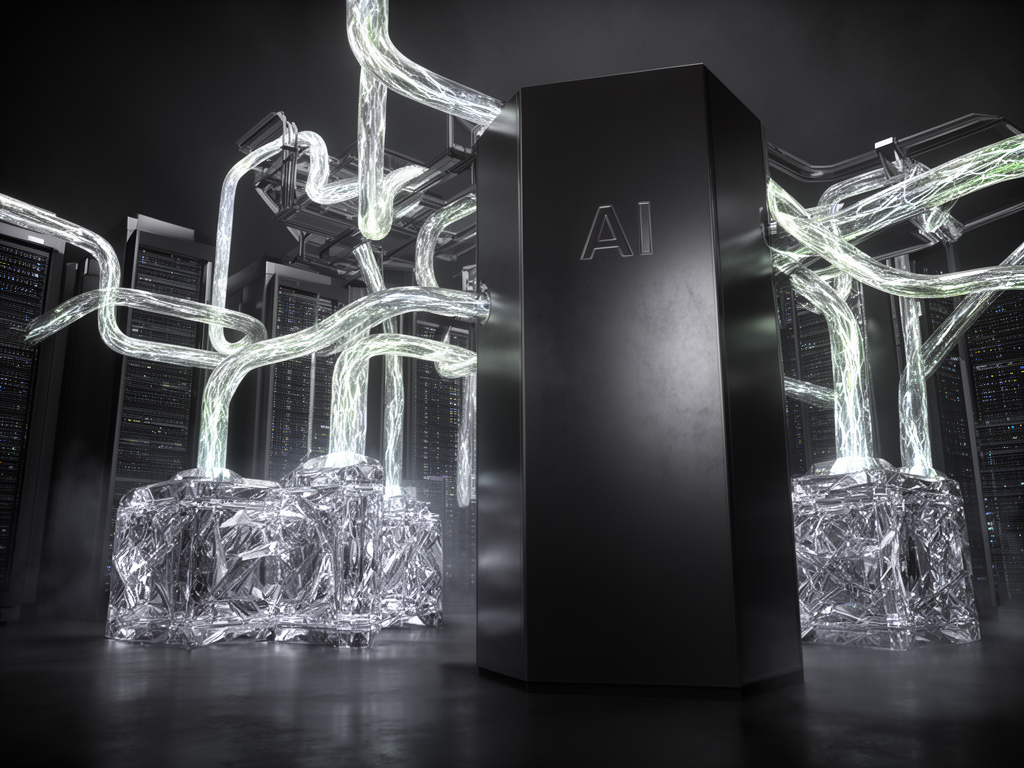
Still feeding AI racks with a room full of UPS gear? That is like putting a turbo V12 on a drinking straw.
The AI compute surge is forcing a hard reset in data-center power design. Instead of pushing every watt through a centralized UPS, hyperscalers are moving backup closer to the load with rack-level battery backup units (BBUs) and, increasingly, supercapacitor ride-through. The goal is simple: cut conversion losses, boost resilience, and right-size backup to the 50-120 kW per GPU rack reality.
The problem
Centralized UPS architectures made sense when racks pulled 5-10 kW. Today’s AI racks do an order of magnitude more and swing fast. NVIDIA’s GB200 and NVL72-class systems push rack powers that demand tighter power quality and faster ride-through near the load, not 40 meters away behind a maze of switchgear as NVIDIA’s platform data underscores. Meanwhile, data-center electricity demand is surging: U.S. sites consumed roughly 183 TWh in 2024, potentially more than doubling by 2030 as AI scales, with grid stresses to match per Pew’s roundup and Carbon Brief’s analysis.
The solution
Move the energy buffer to the rack and simplify the power chain.
- 48 V rack power and BBUs: Open Compute’s 48 V ecosystem pushes conversion stages out and efficiency up. Google publicly contributed its 48 V rack designs to OCP, helping standardize the path away from legacy 12 V and room-scale UPS as reported here and summarized on the OCP power wiki.
- Rack/server-level backup: Meta’s Open Rack includes a battery backup unit option in the power shelf so each rack carries its own short-duration energy store per Open Rack docs.
- Grid-interactive batteries: Microsoft is linking sophisticated UPS batteries at or near the rack and using them to support local grids, a dual-use that improves resilience and unlocks grid value as Microsoft describes and industry coverage notes.
- Supercapacitor ride-through: For sub-minute events and rapid transients common in AI loads, EDLC-based modules deliver instant response, extreme cycle life, and high power density. Vendors are now positioning supercaps specifically for data-center UPS and ride-through as Skeleton argues and as Eaton’s module lineup supports.
Why this is happening now
- Right-sizing beats oversizing: Central UPS blocks are sized for worst-case across a hall. Per-rack BBUs scale with actual GPU rows, trimming stranded capex and pushing round-trip efficiency up in the aisle where it matters as DCD explores.
- AI rack dynamics: High step-loads and fast sag/swells favor ultra-fast energy buffers. Supercapacitors excel at microsecond-millisecond response where batteries do not, making mixed BBU + supercap topologies attractive for AI power quality per vendor data.
- Grid headwinds become opportunities: Aggregated rack batteries acting as grid-interactive UPS can provide local support, reduce inrush, and potentially participate in markets, a direction highlighted in utility-facing briefs like this ERCOT presentation.
BBUs vs supercapacitors: who does what?
- LFP BBUs: Mainstream for rack/server backup. High safety margin, long life, low cost per kWh. Available across Vertiv, Schneider, Huawei ecosystems Vertiv, Schneider SmartLi, Huawei SmartLi.
- LTO BBUs: Premium cycle life and fast charge. Toshiba’s SCiB cells are common where life and safety dominate over energy density see SCiB.
- Supercapacitors: Ride-through specialist for sub-minute events and high ripple, with essentially unlimited cycle life and instant response. Increasingly paired with BBUs to offload high-power, short-duration stress from batteries Eaton modules, Skeleton superbattery.
Safety and code inside the data hall
Bringing energy storage into the white space tightens the compliance picture. Three anchors matter:
- NFPA 855: Installation practices and hazard mitigation for stationary ESS, increasingly referenced by AHJs for in-rack batteries NFPA 855.
- UL 9540A: Thermal runaway and fire propagation testing for ESS. Expect AHJs to ask for cell-to-rack test stacks and mitigation data when BBUs live in the aisle UL 9540A.
- IFC Section 1206: Siting, ventilation, detection, and separation for indoor ESS IFC reference.
Market implications
- Chemistry mix shifts: LFP is the default for BBUs on cost and safety, while LTO wins for brutal cycling. Supercaps emerge as the shock absorber for AI racks. Expect LFP/LTO volume growth inside aisles and supercap attach rates to rise with higher rack power densities as performance notes suggest.
- Geography: The most visible supercapacitor momentum sits with European and U.S. power OEMs and specialty players today e.g., Skeleton, Eaton, while many Taiwan ODMs remain focused on LFP/LTO BBU integration for OCP racks. That balance could shift as EDLC use cases mature.
- Power markets: Grid-interactive UPS and rack batteries will increasingly be modeled as fast DR and voltage support assets at hyperscale campuses, not just unproductive insurance see coverage.
Operator playbook: do this next
- Adopt OCP ORv3 power shelves with integrated BBUs to standardize 48 V distribution and simplify the conversion chain OCP reference.
- Design GPU rows for 50-120 kW per rack, with supercapacitor ride-through for sub-minute events and LFP/LTO BBUs for sustained backup GPU rack guidance.
- Qualify chemistry and pack design against UL 9540A and local interpretations of NFPA 855/IFC 1206. Build in separation, detection, and controlled ventilation.
- Plan grid-interactive modes early with the utility. GUPS/BBU stacks can cap inrush, shave peaks, and provide ancillary-like smoothing if telemetry and controls are in spec Microsoft case, ERCOT brief.
Supplier checklist
- Offer hot-swappable 48 V BBU modules with LFP and LTO options, OCP ORv3 mechanicals, and UL 1973/9540A documentation.
- Pair with supercap cassettes for transient duty and battery life extension.
- Instrument like a product: per-rack telemetry, harmonics, and grid-interactive controls with secure protocols.
Investor lens
- Chemistries: LFP and LTO pack integrators for server BBUs; EDLC module makers targeting data halls.
- Power electronics: 48 V shelves, GaN/SiC DC-DC for high-density conversion see OCP demos.
- Codes and compliance: Testing, sensing, and suppression vendors that make in-hall storage pencil.
Bottom line
The centralized UPS is not dead, but AI is pushing backup to the rack where the power is. BBUs plus supercapacitors cut losses, sharpen resilience, and turn backup from stranded insurance into an operational asset. If you run, build, or fund AI data centers, it is time to spec the aisle like a power plant and make every joule earn its keep.